
COP119 (Security) and COP119 (Security) Plus

Understanding COP 119 (Security): A Key Code of Practice for the UK Security Industry

COP 119 is a comprehensive Code of Practice developed to enhance the efficiency and quality of labour supply chains in the UK security industry. This certification, focused on the ‘provision of labour in the security and events sector,’ ensures companies adhere to best practices and maintain high standards of service delivery.

COP119 (Security) Plus

Where COP119 (Security) covers the essential aspects of labour provision, COP119 (Security) Plus goes a step further. It includes assessments against BS7858 (Security screening of individuals employed in a security environment. Code of Practice) and BS10800 (Provision of security services – Code of Practice). Successfully meeting these standards will result in certification for BS7858 and BS10800, demonstrating your commitment to industry best practices.


Why Certification Matters:

In the dynamic fields of security, guarding, and event management, there is often a need for additional staff to meet sudden demand surges, such as those during large events or peak seasons. Mismanagement in labour procurement can lead to serious issues like worker exploitation and public safety risks. Key concerns include:

  • Inadequate security screening as per BS 7858:2020
  • Poor control over SIA licensing
  • Violations of working time regulations and minimum wage laws
  • Insufficient right-to-work checks
  • Lapses in employment status checks and PAYE compliance

Implementing proper practices and achieving COP 119 certification helps organisations mitigate these risks effectively.

Key Advantages of COP119 (Security) and COP119 (Security) Plus: 
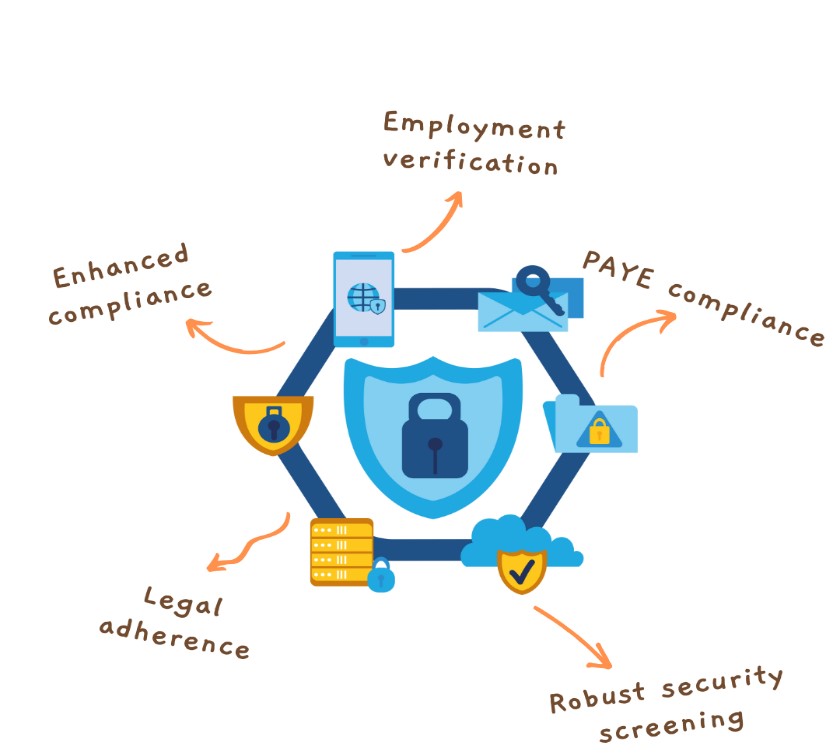
  • Enhanced Compliance: Ensures thorough checks and ongoing monitoring of SIA licenses for security personnel.
  • Robust Security Screening: Implements BS 7858:2020 standards for comprehensive security screening.
  • Legal Adherence: Guarantees compliance with working time regulations and minimum wage laws.
  • Employment Verification: Conducts right-to-work checks and verifies employment status.
  • PAYE Compliance: Maintains a compliant payroll system.

Benefits of Obtaining COP119 (Security) and COP119 (Security) Plus
Who Should Pursue COP 119 (Security) and COP119 (Security) Plus Certification?
All businesses supplying labour in the security and events sectors are eligible for COP119 (Security) and COP119 (Security) Plus certification. This certification serves as proof that the company meets industry standards and legal obligations.

Assessment Process

The duration of the COP119 (Security) Plus certification assessment depends on the number of workers employed, with proportional sampling of screening files to ensure thorough evaluation.

Getting Started with Certification

Interested companies can begin the certification process by completing our enquiry form. A team member will contact you to guide through the next steps.

Disclaimer: The COP119 (Security), COP119 (Security) Plus, BS7858 and BS10800, BS7499 certificates will be issued following an independent audit and assessment by Forefront Certification Limited. While they reflect compliance with the principle of the standards, they are not accredited by UKAS or any other regulatory bodies.
WHAT IS ISO 9001—QUALITY MANAGEMENT SYSTEMS?

ISO 9001 is an international management system standard that specifies requirements for a QMS. Organizations use the standard to demonstrate their ability to consistently provide products and services that meet customer and regulatory requirements, as well as the organization’s own requirements. With more than 1 million certified users, it is the most popular ISO standard, and the only standard within the ISO 9000 series of standards to which organizations can certify.

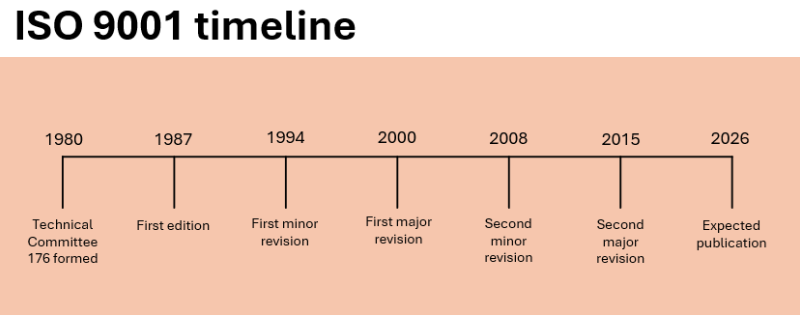
ISO 9001 was first published in 1987 by the International Organization for Standardization (ISO), an international organization comprised of the national standards bodies of more than 170 countries.

The process of periodic review is embedded in all ISO management systems standards and requires member bodies to examine the relevance of a standard every five years. When doing so, the member bodies can decide to continue publication without revision, revise, or discontinue issuance.

ISO 9001 has undergone revisions in 1994, 2000, 2008 and 2015:

  • ISO 9001:1994 included changes to improve the control of design and development clause, as well as provide other clarifications. The roles of ISO 9002 and 9003 also were modified slightly.
  • ISO 9001:2000 included significant changes to make it a process-based standard instead of one that dictates multiple documented procedures. ISO 9001, ISO 9002, and ISO 9003 were integrated into a single applicable QMS standard that allowed for justified exclusions of product realization requirements that were not applicable to the organization. Other key changes included engagement by the organization’s top leadership, key performance indicators to track performance, and continual improvement.
  • ISO 9001:2008 clarified issues raised during the application of ISO 9001:2000.
  • ISO 9001:2015 ensured that the standard continued to adapt to the changing environments in which organizations operate. Some key updates included:
    • The introduction of new terminology
    • Restructuring some of the information
    • Quality principles being listed for consideration when implementing the standard
    • Emphasizing risk-based thinking to enhance the application of the process approach
    • Improved applicability for services
    • Increased leadership requirements

Currently, the standard is going through another revision cycle and is expected to be published in 2026.;

Climate change consideration

In 2024, ISO passed a resolution in support of the ISO London Declaration to combat climate change, which affected ISO management system standards (MSS)—including ISO 9001. The amendment added two new statements to ISO MSSs that require organizations to consider the effects of climate change on the organization’s ability to achieve the intended results of its management system.

The amended language in ISO 9001 is shown here in red:

4.1 Understanding the organization and its context

The organization shall determine external and internal issues that are relevant to its purpose and that affect its ability to achieve the intended result(s) of its quality management system.

The organization shall determine whether climate change is a relevant issue.

4.2 Understanding the needs and expectations of interested parties.

The organization shall determine:

  • The interested parties that are relevant to the quality management system.
  • The relevant requirements of these interested parties.
  • Which of these requirements will be addressed through the quality management system.

NOTE: Relevant interested parties can have requirements related to climate change.

ISO 9001 has undergone revisions in 1994, 2000, 2008 and 2015:

  • ISO 9001:1994 included changes to improve the control of design and development clause, as well as provide other clarifications. The roles of ISO 9002 and 9003 also were modified slightly.
  • ISO 9001:2000 included significant changes to make it a process-based standard instead of one that dictates multiple documented procedures. ISO 9001, ISO 9002, and ISO 9003 were integrated into a single applicable QMS standard that allowed for justified exclusions of product realization requirements that were not applicable to the organization. Other key changes included engagement by the organization’s top leadership, key performance indicators to track performance, and continual improvement.
  • ISO 9001:2008 clarified issues raised during the application of ISO 9001:2000.
  • ISO 9001:2015 ensured that the standard continued to adapt to the changing environments in which organizations operate. Some key updates included:
    • The introduction of new terminology
    • Restructuring some of the information
    • Quality principles being listed for consideration when implementing the standard
    • Emphasizing risk-based thinking to enhance the application of the process approach
    • Improved applicability for services
    • Increased leadership requirements

Currently, the standard is going through another revision cycle and is expected to be published in 2026.;

Climate change consideration

In 2024, ISO passed a resolution in support of the ISO London Declaration to combat climate change, which affected ISO management system standards (MSS)—including ISO 9001. The amendment added two new statements to ISO MSSs that require organizations to consider the effects of climate change on the organization’s ability to achieve the intended results of its management system.

The amended language in ISO 9001 is shown here in red:

4.1 Understanding the organization and its context

The organization shall determine external and internal issues that are relevant to its purpose and that affect its ability to achieve the intended result(s) of its quality management system.

The organization shall determine whether climate change is a relevant issue.

4.2 Understanding the needs and expectations of interested parties.

The organization shall determine:

  • The interested parties that are relevant to the quality management system.
  • The relevant requirements of these interested parties.
  • Which of these requirements will be addressed through the quality management system.

NOTE: Relevant interested parties can have requirements related to climate change.

HOW DO I GET STARTED WITH ISO 9001?

Whether you are beginning your ISO 9001 journey or transitioning to a new revision, your first step is to purchase a copy of the standard. ISO 9001 applies to any organization, regardless of size or industry. More than 1 million organizations from more than 170 countries have applied the ISO 9001 standard requirements to their QMSs.

Organizations of all types and sizes find that using the ISO 9001 standard helps them:

  • Organize processes
  • Improve process efficiency
  • Proactively identify risks and opportunities
  • Continually improve

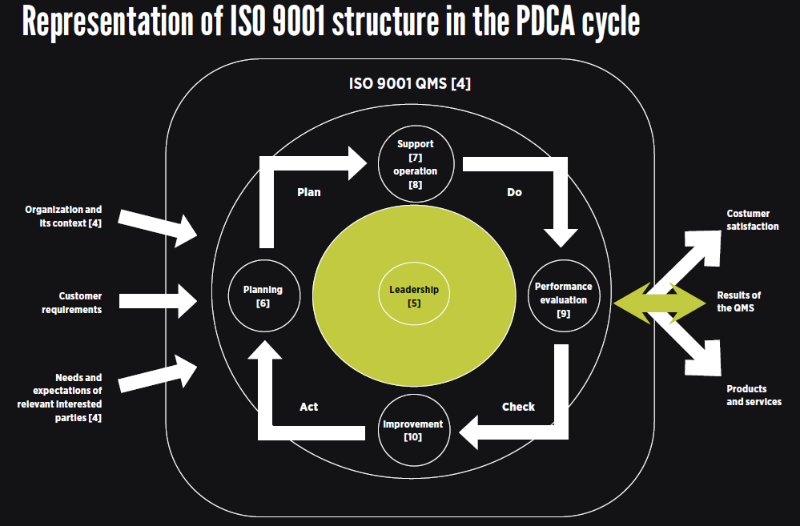
What topics does ISO 9001 cover? ISO 9001 is based on the plan-do-check-act method and provides a process-oriented approach to documenting and reviewing the structure, responsibilities, and procedures required to achieve effective quality management in an organization while using risk-based thinking to better manage the process to achieve planned results.

The standard is made up of eight sections. The first three sections provide general information about the standard, and the last five focus on requirements on how to implement it. The sections are:

  • Section 1—scope: specifies that the organization must meet customer and regulatory requirements, and ensure its employees follow the organization’s policies and procedures while advancing quality through continuous improvement.
  • Section 2—normative reference: provides references—those that conform to ISO 9000’s related norms—to constitute the terms of ISO 9001.
  • Section 3—terms and definitions: defines the terms used in the standard with references to ISO 9000.
  • Section 4—context of the organization: describes the standard’s general requirements, which encompass all activities from understanding organizational context, understanding relevant interested party requirements, determining QMS scope, and determining QMS processes, including processes and the sequence and interaction of the processes to implementing actions to achieve planned results.
  • Section 5—leadership: requires the organization’s leadership to commit to the QMS and explains that leadership must be dedicated to the organization’s products, customers, and planning and review processes.
  • Section 6—planning: focuses on actions to address risks and opportunities, objectives and plans to achieve them, and planning changes to the QMS.
  • Section 7—support: defines the support requirements including resources required for the QMS, competence of the workforce, awareness by persons doing work under the organization’s control, internal and external communications, and documented information.
  • Section 8—operation: defines the entire product and service life cycle steps in acquiring business, planning orders, design and development, external provider controls, production and service provision, and delivery.
  • Section 9—performance evaluation: focuses on monitoring, measuring, analyzing, and evaluating the QMS by requiring the organization to perform periodic internal audits, monitor customer satisfaction, analyze data, and hold management reviews.
  • Section 10—improvement: includes actions for nonconforming products and services, takes corrective actions, and improvements.

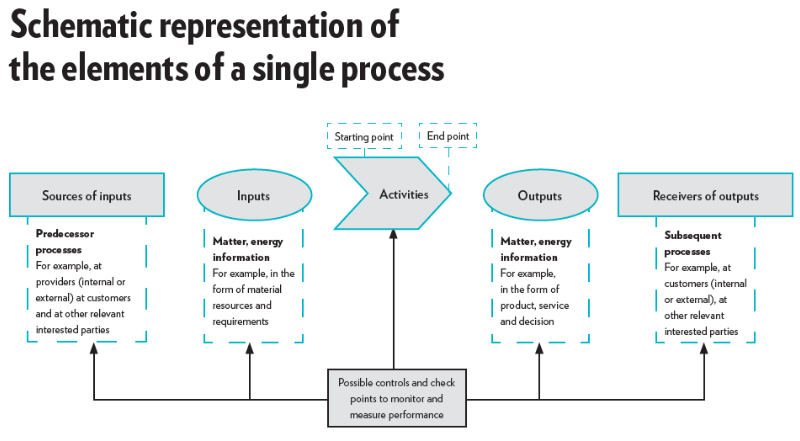
To ease implementation, ISO 9001 suggests adopting a process approach, which is a series of operations that transform inputs into value added output.

WHAT ARE THE BENEFITS OF ISO 9001?


ISO 9001 helps organizations ensure their customers consistently receive high quality products and services, which in turn brings many benefits. Because ISO 9001 specifies the requirements for an effective QMS, using the standard helps organizations:


  • Consistently provide products and services that meet customer and applicable statutory and regulatory requirements
  • Increase customer, management, employee, and other interested party satisfaction
  • Address risk and opportunities to be proactive so desired results are achieved
  • Demonstrate conformity to QMS requirements
  • Continually improve their processes
  • Reduce costs

ISO 9001 CERTIFICATION


ISO 9001 is the only standard in the ISO 9000 series to which organizations can certify. Achieving ISO 9001 certification means that an organization has demonstrated that it:

  • Follows the guidelines of the ISO 9001 standard
  • Fulfills its own requirements
  • Meets customer, statutory, and regulatory requirements
  • Creates and maintains documentation and records

ISO 9001 certification can enhance an organization’s credibility by showing customers that the organization’s products and services meet expectations. In some instances or industries, certification is required or legally mandated. The certification process includes implementing the requirements of ISO 9001 and completing a successful registrar’s audit confirming the organization meets those requirements.


Organizations should consider the following as they begin preparing for ISO 9001 QMS certification:

  • Certification body’s costs for ISO 9001 registration, surveillance, and recertification audits
  • The organization’s current level of conformance with ISO 9001 requirements
  • Resources the organization will dedicate to develop and implement the project
  • Support and costs required from a consultant

National Association of Security Dog Users Accreditation

NASDU Accreditation refers to approval by NASDU – the National Association of Security Dog Users, the UK’s leading professional body for canine security services.

It is the gold-standard accreditation for companies and handlers providing security dog (K9) services in the UK and internationally.


What NASDU Accreditation Means

Being NASDU accredited confirms that a company and its dog handlers:

  • Meet strict operational, welfare, and training standards

  • Use dogs that are professionally trained and assessed

  • Employ handlers who are competent, licensed, and experienced

  • Operate in compliance with UK law and industry best practice

  • Maintain the highest standards of canine welfare and control


What NASDU Assesses

1. Dog & Handler Competence

  • Dog temperament, obedience, and control

  • Handler knowledge, experience, and operational capability

  • Handler-to-dog pairing suitability

  • Real-life operational scenario testing

2. Training Standards

  • Initial and ongoing dog training programs

  • Handler certification and refresher training

  • Deployment procedures

  • Emergency handling and recall control

3. Welfare & Care

  • Kennelling standards

  • Veterinary care and vaccination records

  • Rest periods, hydration, and welfare checks

  • Compliance with the Animal Welfare Act

4. Operational & Legal Compliance

  • Licensing and insurance

  • Risk assessments and deployment plans

  • Incident reporting procedures

  • Control of dogs in public and private environments


Who Needs NASDU Accreditation

NASDU is essential for:

  • Canine security companies

  • K9 patrol services

  • Guard dog services

  • High-risk site security

  • Perimeter protection services

  • Events and crowd-control security with dogs

Many major clients, including:

  • Local authorities

  • Critical infrastructure operators

  • Construction & industrial sites

  • Government contractors

Require NASDU accreditation as a condition of contract.


Benefits of NASDU Accreditation

  • Industry-recognized professional credibility

  • Increased client confidence and trust

  • Access to high-value and regulated contracts

  • Proof of compliance with UK security and animal welfare laws

  • Reduced operational and legal risk

  • Competitive advantage in tenders

safe contractor approved accreditation

SafeContractor Approved Accreditation is a widely recognized UK-based health and safety accreditation scheme that verifies a company’s compliance with health, safety, equality, diversity, and environmental standards.

It is operated by Alcumus SafeContractor and is commonly required by local authorities, housing associations, facilities management companies, and large corporate clients before awarding contracts.

What SafeContractor Accreditation Means

Being SafeContractor Approved confirms that a business:

  • Has robust Health & Safety policies and procedures

  • Meets UK Health & Safety legislation requirements

  • Demonstrates effective risk management

  • Operates safely for employees, clients, and the public

  • Follows best practice in equality, diversity, and environmental responsibility

What Is Assessed

SafeContractor reviews and audits documentation such as:

Health & Safety

  • Health & Safety Policy

  • Risk Assessments & Method Statements (RAMS)

  • Accident & incident reporting procedures

  • Training records and competence

  • PPE policies

  • Equipment and plant safety checks

Equality, Diversity & Inclusion

  • Equality & diversity policy

  • Anti-discrimination practices

  • Fair employment procedures

Environmental Management

  • Environmental policy

  • Waste management procedures

  • Pollution prevention measures

  • Sustainable working practices


Who Needs SafeContractor Accreditation

It is commonly required for:

  • Construction & building contractors

  • Security services

  • Cleaning & facilities management

  • Gas engineers & electricians

  • Plumbers & maintenance services

  • Event & site management companies


Benefits of SafeContractor Accreditation

  • Increased credibility & trust

  • Eligibility for higher-value contracts

  • Preferred supplier status with councils and corporates

  • Reduced risk of accidents and compliance failures

  • Competitive advantage in tenders and bids

  • Demonstrates commitment to best practice


How Long It Lasts

  • Valid for 12 months

  • Requires annual renewal

  • Continuous compliance is expected throughout the year

GWP Security Services has now gained its accreditation in the Provision of Labour in the Security and Events Sector.

GWP Security has now gained its accreditation in the Provision of Labour in the Security and Events Sector.

COP 119 is a code of practice developed for security agents and aims to improve the effectiveness of security guarding service provisions. It enables companies providing labour to security companies to demonstrate best practice by holding independent certification in the scope of ‘provision of labour in the security and events sector’, having been audited against the requirements of COP 119.

This helps ensure that security standards are not compromised but instead maintained effectively whilst necessary contractual requirements are met.

The scope of COP 119 covers all labour provision for companies operating in the regulated security and events sector.

COP 119 includes solutions for:

  • An absence of adequate checks and monitoring of deployed security officer SIA licences
  • Security screening to BS 7858
  • Adherence to working time regulations
  • Paying of minimum wage
  • Right to work checks
  • Employment Status

What are the benefits of COP 119?

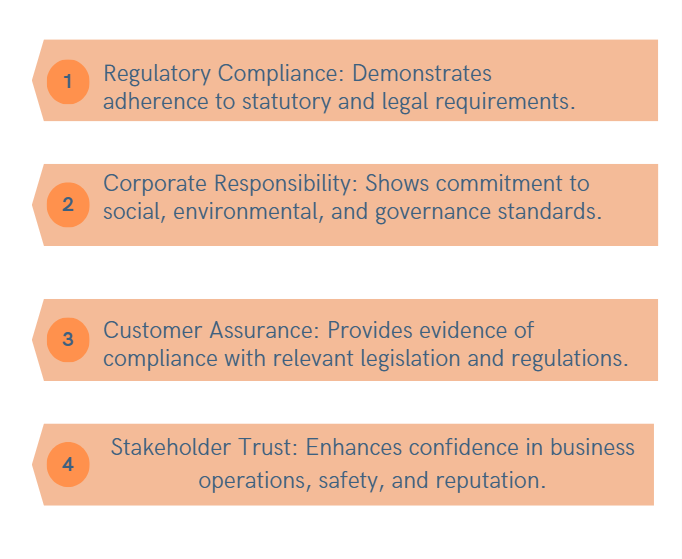
Gaining approval of this code of practice will enable you to demonstrate your commitment to meeting statuary and legal requirements and to the social, environmental and governance criteria within which the provision of service is delivered.

Contractors use COP 119 as a requirement when acquiring additional labour and using the COP 119 code ensures the quality, safety and reputation of their business while using your services.

Accreditations
Certified, Trusted & Recognised.